Your open-weight model's license is probably lying to you
The license tag on an open-weight model often isn't the license you're actually bound by. Licenses inherit through fine-tunes, and the tag inherits wrong all the time. Ship on the tag and you can be running a restricted model in production without knowing it.
tsukumo
The short answer
The license tag on an open-weight model is often not the license you are actually bound by. A model's license inherits through its lineage: a fine-tune is bound by its base model's terms, and the base by its base, all the way down. The tag on the model page is set by a human and inherits wrong all the time, so a model labelled permissive can really be a fine-tune of a non-commercial base. To ship safely you trace the lineage to the original license, not the tag.
Short version: the license tag on an open-weight model is often not the license you are actually bound by. A model's terms inherit through its lineage. A fine-tune is bound by its base model's license, the base by its base, all the way down to the original weights. The tag on the model page is set by a human, and on fine-tunes it inherits wrong constantly, so a model labelled "permissive" can really be a fine-tune of a non-commercial base. We trace this for clients before they build on a model, because shipping production on a mislicensed model is a legal landmine you step on quietly and discover loudly.
Because the tag is metadata a person typed, and the binding terms live somewhere else.
The license field on a model page is a label, not a contract. It is set by whoever uploaded the model, and there is nothing enforcing that it matches the actual license file, let alone the licenses of everything the model is derived from. On a base model from a serious lab the tag is usually right. On the long tail of community fine-tunes, it is a coin flip, because the uploader often copies a permissive tag from a template without checking what they fine-tuned. The tag is a claim. The license is what binds you.
A fine-tune is a derivative of the weights it started from, so it carries those terms with it.
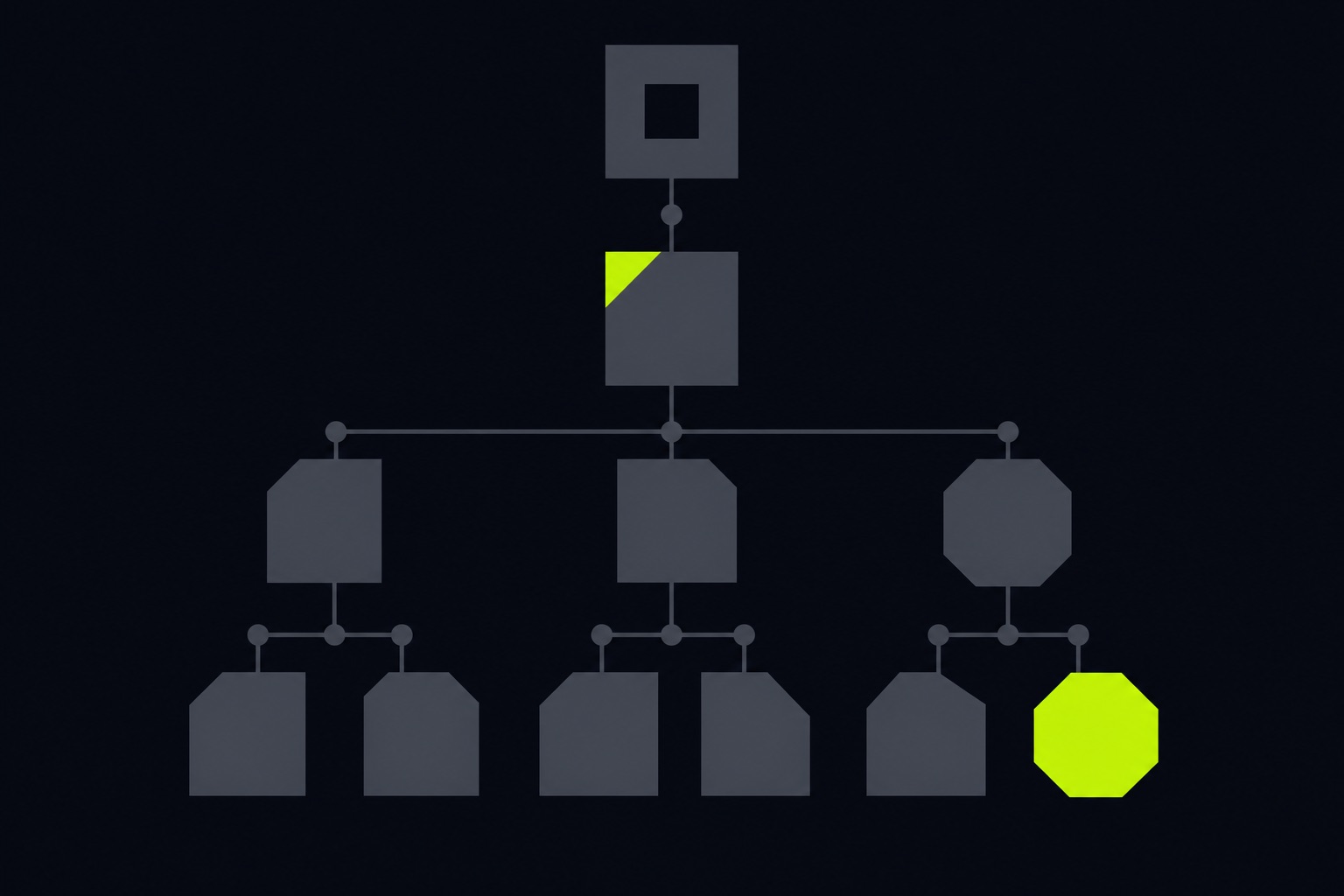
When someone fine-tunes a base model, the result is generally bound by the base model's license plus whatever the fine-tuner adds on top. That has a consequence people miss: a restriction does not wash out by fine-tuning. If the base is research-only or non-commercial, a fine-tune of it is too, no matter what tag the fine-tune wears. The lineage looks like this, and the most restrictive term anywhere in the chain is the one that governs you:
The model you want to use is a fine-tune of model B.
Model B is itself a fine-tune of base model A.
Base model A has the original license, and maybe its training data has a license too.
You are bound by the strictest link, not by the label on the last one.
Where does your team actually stand on this? A short agent-ops assessment is the low-risk way to find out.
The war story: the tag said permissive, the base did not#
We evaluated a capable open-weight model for a client build. Its model page wore a permissive, commercial-friendly tag, and on the tag alone it looked cleared to ship.
It was a fine-tune. Two hops up its lineage sat a base model whose license was explicitly non-commercial. The permissive tag had been copied onto the fine-tune by someone who never traced the base, and the model had been downloaded plenty of times by teams trusting that tag. Building a commercial product on it would have meant shipping on a non-commercial model, with the restriction sitting two links up the chain where nobody had looked. We caught it because we trace lineage as a rule, not because anything on the page warned us.
Treat licensing as a step in model selection, not a thing legal does after you have already built on it.
Trace the lineage to the root. Find what the model is a fine-tune of, and what that is a fine-tune of, down to the original base. Read each license in the chain.
Take the most restrictive term. Whatever the strictest link says (non-commercial, no-competition, field-of-use, attribution) is what governs your use, regardless of the final tag.
Check the data, too. Some models carry dataset-license obligations that ride along with the weights. A clean weights license over a restricted dataset is still restricted.
Read for use-based clauses. Many "open" model licenses are not OSI-open: they add acceptable-use, no-compete, or no-commercial terms a true open-source license never would.
Record the result. Write down the lineage and the governing terms so an auditor, an acquirer, or a future you can see the model was cleared and why.
For a hobby project, a mislicensed model is a shrug. For a company shipping a product, it is a liability that compounds with adoption.
The more your product depends on a model, the more expensive it is to discover later that you were never allowed to use it commercially. It surfaces at the worst times: a due-diligence review during fundraising, an acquirer's IP audit, a competitor's complaint. None of that shows up while you are building, which is exactly why the discipline has to be upfront. Clearing the license costs an hour. Ripping a mislicensed model out of a shipped product costs a quarter.
If your stack includes open-weight models, make license-tracing a required step in model selection, owned by whoever picks the model, not bolted on by legal at the end. Trace to the root, take the strictest term, check the data, read for use-based clauses, and write down the result. The tag is a claim to verify, never a fact to trust.
We do this tracing as part of standing up AI for clients, because in a regulated or commercial build a mislicensed model is the kind of quiet mistake that gets loud at the worst moment. If your team wants its model choices cleared before they become foundations, that's the work we do.
We trace the lineage of the models you depend on and tell you what actually binds you before you build on them.
Clearing a license costs an hour. Ripping a mislicensed model out of production costs a quarter.
No. "Open weights" means you can download the weights; it does not mean the license permits commercial use. Some open-weight models are research-only or non-commercial, and others restrict fields of use. You have to read the actual license for the specific model and its lineage, not assume open weights equals free to ship.
Does a fine-tuned model inherit its base model's license?
Usually yes. A fine-tune is a derivative of the base weights, so it is generally bound by the base model's license terms in addition to anything the fine-tuner adds. If the base is non-commercial, fine-tuning it and relabelling the result does not make it commercial. The restriction travels with the lineage.
Can I trust the license tag on the model page?
Not on its own. The tag is metadata a human sets, and it frequently does not match the real license, especially on fine-tunes where the uploader copies a permissive tag without tracing the base. Treat the tag as a claim to verify, not a fact. The binding terms are in the actual license file and the model's lineage.
How do I check an open model's real license before shipping?
Trace the lineage. Find what the model is a fine-tune of, then what that is a fine-tune of, down to the original base, and read each license in the chain. The most restrictive term in the lineage governs. Also check for use-based clauses (no-commercial, no-competition, field-of-use) and any dataset license that rides along. Record the result so an auditor can see it.